


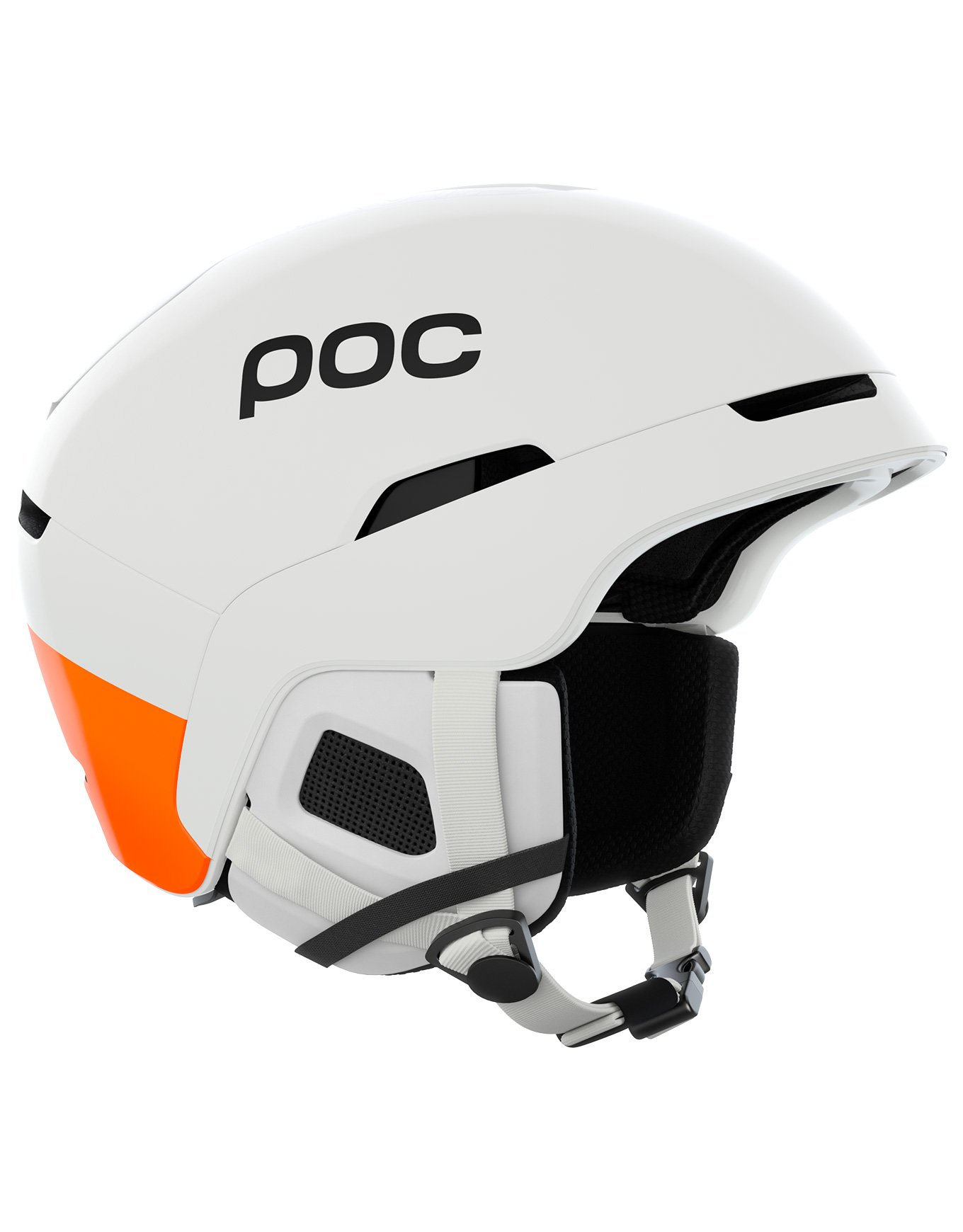
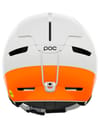
Obex MIPS Hydrogen White/Fluorescent Orange
Ski/Snowboard helmet -
Other colors available




 60 days to change your mind
 No subject to promotional offers
The Obex MIPS Hydrogen White/Fluorescent Orange helmet from the brand POC is designed to offer optimal protection for winter sports enthusiasts.
Its outer shell, combining polycarbonate and ABS, provides high impact resistance, while the inner lining of expanded polystyrene effectively absorbs energy in the event of an impact. The Mips® system, meanwhile, reduces rotational forces transmitted to the brain during an oblique impact, offering additional protection.
Furthermore, the 360° adjustment system allows for a personalised fit for optimal comfort, whatever the shape of your head. The adjustable ventilation adapts to all weather conditions and the goggle clip ensures a clear field of vision, while the flexible clip at the back of the helmet makes attaching your goggles easier. Finally, the removable ear pads can be adapted to different conditions.
Another highlight of this helmet: the model is compatible with the POC Aid communication system, allowing you to stay safely connected on the slopes.
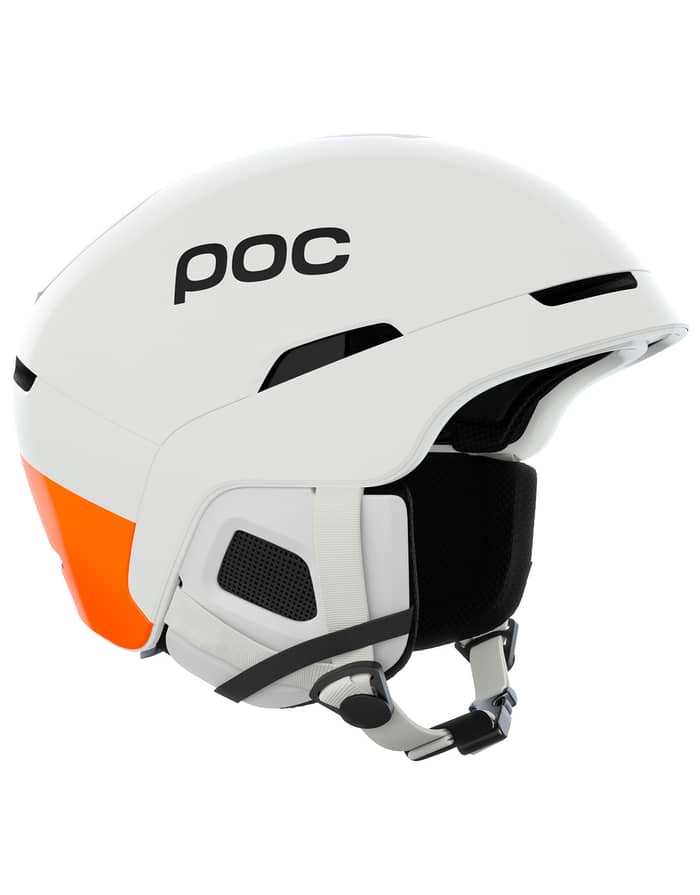


- 360° adjustment system
- Goggle pass-through
- Flexible clip at the back of the helmet
- Removable ear pads
- Compatible with the POC Aid communication helmet (sold separately)
- Certifications EN 1077-B, ASTM F2040, UKCA
Composition:
- Outer shell: Polycarbonate with upper section in ABS
- Liner: EPS
| Size | Head circumference | Weight |
| XS-S | 51-54 cm | 460 g |
| M-L | 55-58 cm | 500 g |
| XL-XXL | 59-62 cm | 550 g |
| MIPS® | Multidirectional Impact Protection System: Mips® is a revolutionary technology that mimics the brain’s natural protection system. The low-friction Mips® layer creates a sliding margin between the helmet and the head, providing enhanced protection against brain injuries caused by violent rotational forces during oblique impacts. |
| RECCO® | RECCO® is an avalanche rescue system used worldwide to facilitate the rapid location of people. The two-part system includes a detector used by rescuers and reflectors integrated into clothing. Together, they enable quick localisation using radar but do not replace the use of transceivers. |


Our Bloch' letter


